Ons Chrysogelos

How to avoid miscarriage with PCOS is one of those questions that makes your stomach drop just typing it. And if you’re here, you’ve probably already been through something hard – a loss, a scare, or just that constant low-grade fear that your body might not cooperate. First thing first: PCOS does raise your miscarriage risk a little. But “a little higher” is not the same as “inevitable.” There’s actually a lot you can do. And that’s exactly what this guide is about.
If you haven’t already, go read our piece on PCOS treatment for fertility: What really works – it lays out a solid foundation for understanding how PCOS messes with your reproductive hormones. It pairs well with everything we’re going to cover here.
Now let’s get into it.
Does PCOS really increase miscarriage risk?
Yeah, it does. But let’s not catastrophize, okay?
Research shows that women with PCOS have a somewhat higher rate of early pregnancy loss compared to women without it. Some studies put the miscarriage rate in PCOS at around 30-50%, compared to 10-15% in the general population. That sounds scary. But here’s the thing – a lot of those losses are tied to things that can actually be managed. Like insulin resistance. Like low progesterone. Like inflammation that nobody bothered to address.
So it’s not that your body is broken. It’s more like – some things are running in the background and nobody told you to close the tabs.
Why does PCOS cause miscarriage?
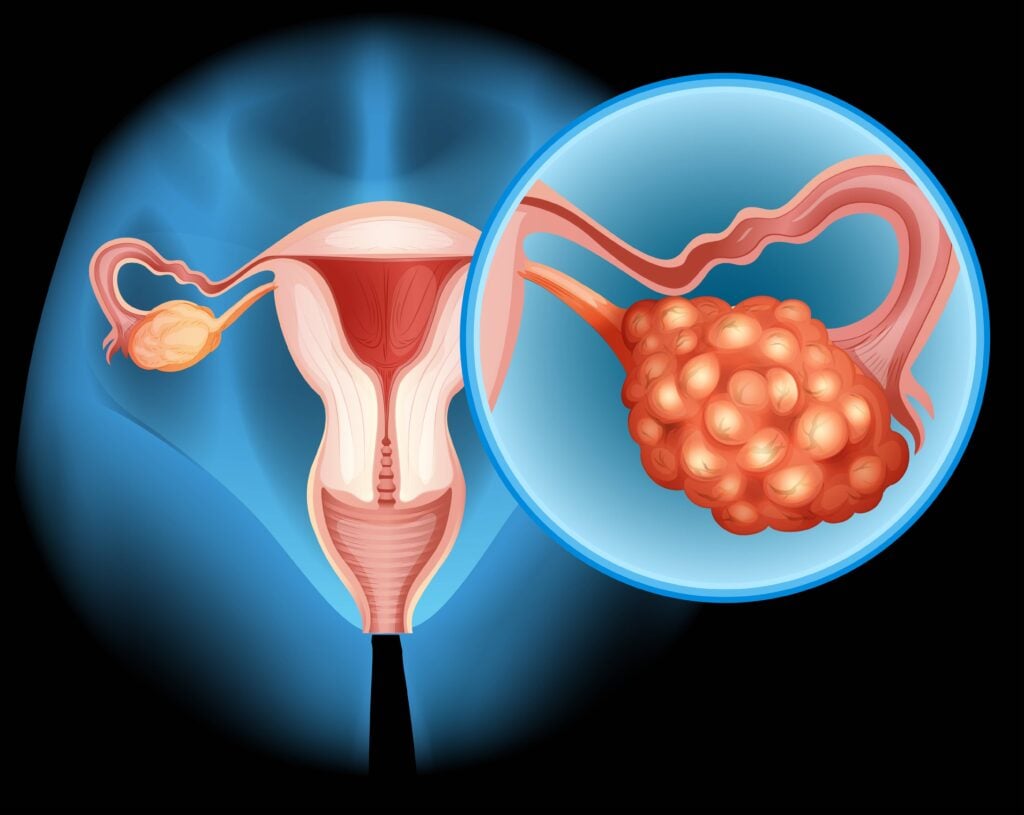
This is the part that most articles gloss over, and it honestly drives me a little crazy. “PCOS causes miscarriage” – okay, but why? The reason matters, because it points you toward what to actually fix.
A few things are usually going on at once. Insulin resistance is a big one. When your cells don’t respond well to insulin, your blood sugar spikes and crashes, and that kind of instability is not great for a developing embryo. High insulin also drives up androgens (basically, male hormones), which can interfere with ovulation and early implantation.
Then there’s progesterone. After ovulation, your body is supposed to produce enough progesterone to support the lining of your uterus and keep it cozy for the embryo. In PCOS, that luteal phase support is often weak. So the embryo implants, but the uterine environment isn’t quite ready to hold on.
And inflammation. PCOS is kind of a chronic, low-grade inflammatory condition. That immune system buzz in the background can disrupt early pregnancy in ways that aren’t always obvious.
In my experience, when someone with PCOS has recurrent losses, the conversation about why often happens way too late – usually after the third loss, when it should’ve started way earlier.
Can you have a healthy pregnancy with PCOS?
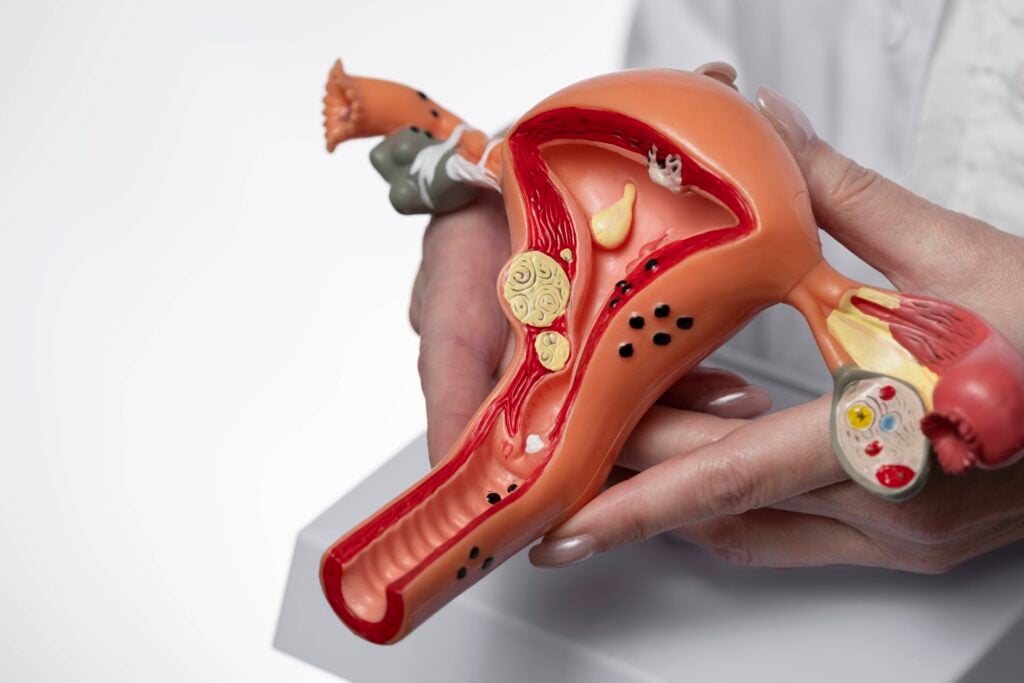
Yes. Full stop.
Plenty of people with PCOS carry healthy pregnancies to term – either naturally or with some support. The goal is to figure out which factors are in your particular picture and get ahead of them. That’s kind of the whole game here.
Does progesterone help prevent miscarriage in PCOS?
This is one of the most common questions, and honestly, the answer is: probably yes, for a lot of people.
Progesterone supplementation in early pregnancy – especially during the first trimester – is pretty widely used now for women with PCOS or a history of early losses. The thinking is straightforward. If your body isn’t making enough on its own, you give it a boost to help maintain the pregnancy until the placenta takes over at around 10-12 weeks.
Some doctors prescribe it as a precaution from the moment of a positive pregnancy test. Others wait to see progesterone levels first. Either way, it’s worth asking your doctor about directly. Don’t just assume they’ll bring it up. Ask.
Does metformin reduce miscarriage risk with PCOS?
Metformin has been around forever in PCOS treatment, mostly for managing insulin resistance and getting cycles more regular. But there’s also real evidence suggesting it can help reduce miscarriage rates, particularly in the first trimester.
The way it works is kind of indirect. By improving how your body handles insulin, it helps lower androgen levels, supports more stable hormone output, and reduces some of that background inflammation. All of which makes the early pregnancy environment a bit more stable.
Some studies have found that continuing metformin into the first trimester (under medical supervision, obviously) significantly lowers miscarriage risk for women with PCOS. Not a magic fix, but definitely a tool worth discussing with your doctor if you’ve had losses before.
What else actually helps lower miscarriage risk?
Okay so beyond the medications, there are real lifestyle things that move the needle. Not in a “drink this tea and manifest your baby” kind of way – in an actual physiological way.
Stabilizing blood sugar is probably the most important lever. That means eating regularly, not skipping meals, getting enough protein and fiber in each meal so your glucose doesn’t spike. It sounds boring, I know. But unstable blood sugar genuinely makes everything worse – your hormones, your mood, your sleep, and yes, your risk of early pregnancy loss.
Sleep matters more than most people admit. Your hormones do a lot of their reset work overnight. When sleep is fragmented or too short, cortisol goes up, insulin sensitivity goes down, and progesterone production can suffer. It’s all connected.
Stress is – and I say this carefully – not something you can just “reduce” by being told to reduce it. But it does have a real hormonal impact. High cortisol can suppress progesterone and mess with your luteal phase. So things like therapy, reducing overwork, actually resting – those aren’t just self-care fluff. They have a direct hormonal effect.
And if you haven’t already looked into the link between chronic hormonal imbalance and physical symptoms, this piece on Hormonal Imbalance and Back Pain: The Surprising Connection is genuinely eye-opening in terms of how far-reaching these hormonal disruptions can be.
What supplements might support a PCOS pregnancy?

A few come up again and again in research. Inositol – specifically myo-inositol and D-chiro-inositol – has some solid evidence behind it for improving insulin sensitivity and egg quality in PCOS. It’s not prescription, but it’s not nothing either.
Folate (the active form, not always regular folic acid) is important for everyone trying to conceive, but especially with PCOS where metabolism can sometimes be off. Vitamin D deficiency is also incredibly common in PCOS and has been linked to higher miscarriage rates – so it’s worth getting your levels checked.
Omega-3s, magnesium, NAC… there are a few others floating around. But honestly? Don’t just throw a handful of supplements at the problem. Get bloodwork done, figure out what’s actually low, and go from there.
When should I talk to a specialist?
Sooner than you think, honestly. If you’ve had even one miscarriage and you have PCOS, it’s completely reasonable to ask for a referral to a reproductive endocrinologist. You don’t have to wait for three losses before someone takes you seriously. One is enough to start asking questions.
A good specialist will check your progesterone levels, look at your insulin and androgen picture, maybe do an ultrasound to check your uterine lining, and actually build a plan around what’s going on specifically with you – not just PCOS in general.
The bottom line? How to avoid miscarriage with PCOS isn’t one single answer. It’s a combination of understanding your hormones, addressing insulin resistance, getting proper progesterone support, and working with someone who actually listens. You have more options than you might think.
References
- Rai R, Backos M, Rushworth F, Regan L. “Polycystic ovaries and recurrent miscarriage – a reappraisal.” Human Reproduction. 2000.
https://academic.oup.com/humrep/article/15/3/612/695026 - Glueck CJ, Wang P, Goldenberg N, Sieve-Smith L. “Pregnancy outcomes among women with polycystic ovary syndrome treated with metformin.” Human Reproduction. 2002.
https://academic.oup.com/humrep/article/17/11/2858/612677 - Palomba S, de Wilde MA, Falbo A, et al. “Pregnancy complications in women with polycystic ovary syndrome.” Human Reproduction Update. 2015.
https://academic.oup.com/humupd/article/21/5/575/609125 - Unfer V, Carlomagno G, Dante G, Facchinetti F. “Effects of myo-inositol in women with PCOS: A systematic review of randomized controlled trials.” Gynecological Endocrinology. 2012.
https://pubmed.ncbi.nlm.nih.gov/22296306/ - Coomarasamy A, Williams H, Truchanowicz E, et al. “A randomized trial of progesterone in women with recurrent miscarriages.” New England Journal of Medicine. 2015.
https://www.nejm.org/doi/full/10.1056/NEJMoa1504927
Disclaimer: This article is for informational and educational purposes only. It is not a substitute for professional medical advice, diagnosis, or treatment. Always consult your doctor, OB-GYN, or reproductive endocrinologist before making decisions about your pregnancy or health, especially if you have PCOS or a history of miscarriage.